Do I Have Enough Jawbone For Dental Implants?
Glenview, IL
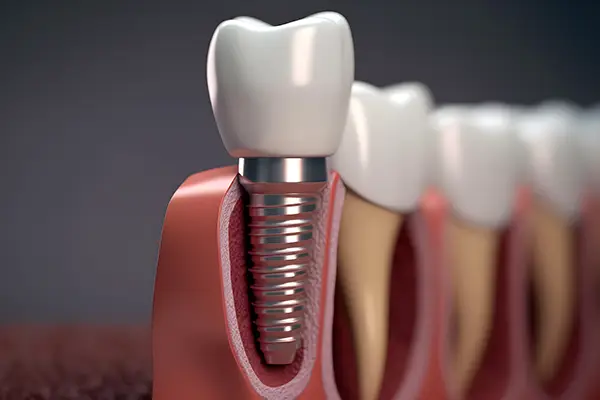 It's a question that comes up in almost every implant consultation: will my jaw actually support this? Bone volume is one of the biggest factors in determining whether dental implants can move forward right away, and it's completely understandable to wonder where you stand before your first appointment. Here's what to know about the signs of jawbone loss, why it happens, and what your options look like at Glen Perio if your bone volume needs a boost. It's a question that comes up in almost every implant consultation: will my jaw actually support this? Bone volume is one of the biggest factors in determining whether dental implants can move forward right away, and it's completely understandable to wonder where you stand before your first appointment. Here's what to know about the signs of jawbone loss, why it happens, and what your options look like at Glen Perio if your bone volume needs a boost.
Signs That May Point to Bone Loss
Because jawbone resorption happens gradually and beneath the surface, most people don't notice it directly. Still, there are a few clues that sometimes point to a change in bone volume.
| • |
A collapsed or sunken appearance in the lower face near a missing tooth
|
| • |
Dentures that have become loose or require more adhesive than they used to
|
| • |
An area with a missing tooth that has been left untreated for a year or more
|
| • |
Visible shifting of nearby teeth into the empty space
|
| • |
A history of long-term gum disease around the site |
None of these signs confirm bone loss on their own, and plenty of people with these experiences still have adequate bone for implants. But if any of them sound familiar, it's a good reason to bring it up during your consultation rather than assume the worst or the best.
Why the Jaw Loses Bone After Tooth Loss
Your jawbone stays strong because of ongoing stimulation from the roots of your natural teeth. Every time you chew, that pressure travels down through the tooth root and into the bone, signaling your body to maintain density in that area. When a tooth is extracted or lost, that signal disappears. Without it, the bone gradually begins to shrink in height and width, a process known as resorption.
This is not a slow, decades-long process in most cases. Noticeable changes can begin within the first 6-12 months after tooth loss, and resorption tends to continue at a slower pace after that if the space is left unaddressed. This is one of the main reasons our dentists encourage patients not to delay tooth replacement, since preserving existing bone is often easier than rebuilding it later.
How The Dentist Confirms Bone Volume
Guessing isn't part of the process. Your dentist will use imaging, most often a cone beam CT scan, to measure the exact height, width, and density of bone at the site where an implant is being considered. This 3D scan gives a far more accurate picture than a traditional two-dimensional X-ray and allows your dentist to plan implant placement with precision, including identifying nearby nerves or sinus structures that need to be avoided during surgery.
This imaging step is what actually answers the question of candidacy. It replaces guesswork with a clear, measurable picture of what your jaw can currently support, and it's the same information your dentist uses to determine whether any preparatory treatment is recommended.
If Bone Volume Is Limited, What Comes Next?
Limited bone volume is a common finding, not a rare complication, and it rarely means implants are impossible. Depending on the extent of the resorption, your dentist may recommend one of the following:
Bone Grafting
A bone graft adds material to the deficient area, using bone from another part of your body, donor bone, or a synthetic substitute. Over several months, this graft integrates with your existing bone, creating a stronger and more voluminous site for implant placement. In cases of mild bone loss, grafting and implant placement can sometimes be completed in a single appointment.
Sinus Augmentation
For implants planned in the upper back jaw, the sinus cavity can limit available bone height. A sinus lift procedure raises the sinus membrane and adds bone material beneath it, creating enough vertical space for a properly sized implant.
Ridge Preservation
If you haven't yet had a tooth extracted but know one is coming, ridge preservation performed at the time of extraction can prevent significant bone loss from occurring in the first place. A bone graft material is placed directly into the extraction socket, helping maintain the shape and volume of the ridge while it heals.
Alternative Implant Approaches
In select cases, shorter or narrower implants, or angled placement techniques used in full-arch treatment approaches, can allow treatment to proceed by working around areas of reduced bone rather than rebuilding them. Whether this is appropriate depends entirely on your specific anatomy and treatment goals.
Why a Personalized Evaluation Matters
No two patients arrive at a consultation with the same bone structure, even if their tooth loss history looks similar on paper. Age, the length of time a tooth has been missing, past dental work, and overall health all play a role in how much bone remains. This is why online information, however helpful for general understanding, can't replace an in-person evaluation with imaging.
At Glen Perio, our dentists review your scans directly with you, explain exactly what they show, and outline a treatment plan suited to your bone structure rather than a generic protocol. Many patients are relieved to learn that even with some bone loss, a clear and achievable path to dental implants still exists.
What to Expect With a Preparatory Procedure
If bone grafting or another preparatory step is recommended, it helps to understand how this fits into your timeline. Healing time varies with the size and location of the graft, but most patients need several months for the grafted material to integrate with existing bone before an implant can be placed on top. This waiting period allows the implant to bond securely once placed, reducing the risk of complications later on.
During healing, your dentist will monitor the site to confirm the graft is integrating well before scheduling implant surgery. Many patients describe recovery from grafting as comparable to a routine extraction. Knowing what to expect ahead of time helps set realistic expectations and makes the process feel far less uncertain.
Find Out Where You Stand
The only way to truly know if your jawbone can support a dental implant is through a professional evaluation and diagnostic imaging. Call Glen Perio at 224-488-3392 to schedule your consultation and get clear, personalized answers about your bone volume and your options moving forward. |


